
There is increasing awareness of the importance of land as an economic distributional issue, with housing activists and food growers coming together to seek common solutions and develop shared analysis.
But what does this mean in terms of energy? In preparation for a session on energy and land at the recent Land for What? event in London, with Holly Tomlinson, we identified a number of issues connecting land and energy:
- Energy in traditional commons, enclosure, and fuel poverty
- Energy colonialism
- Land use
- Ownership
Energy and traditional commons
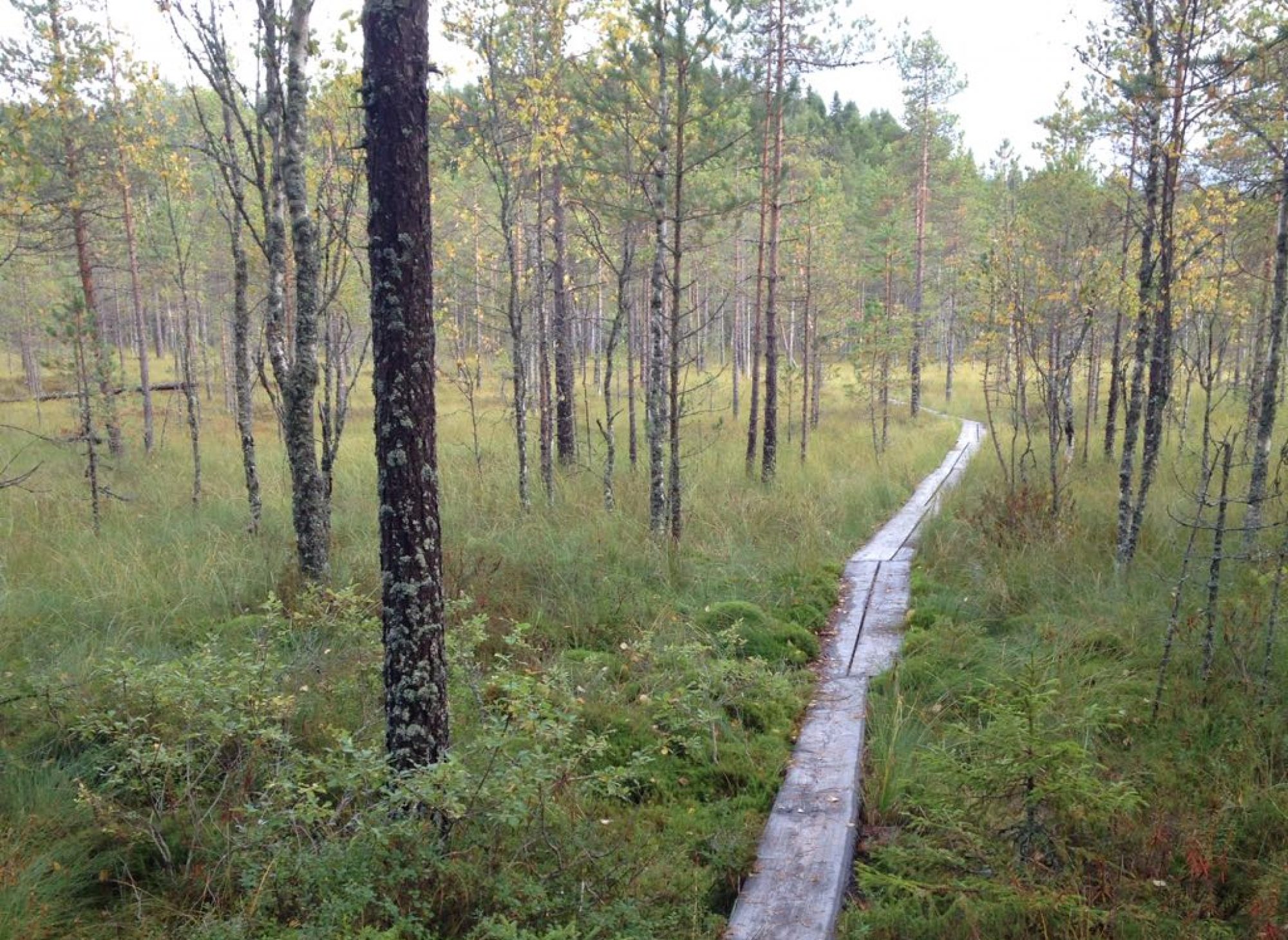
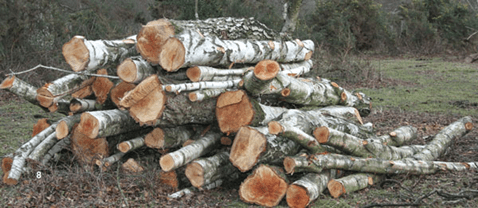
800 years ago, the Charter of the Forest (which is being celebrated by a Tree Charter in 2016) was an important, but less well-known companion to the Magna Carta, which dealt with rights of access to Royal Forests for common people to meet subsistance needs, such as firewood, wood for building repairs and other purposes, grazing animals and pasture for pigs. Several of these rights relate to fuel for heat and cooking: ‘estovers’, derived from a French word meaning necessary, was a right to cut timber for fuel and repair of buildings. ‘bote’, was a right to timber for particular needs, including ‘house-bote’, ‘cart-bote’, ‘plough-bote’, ‘hedge-bote’, ‘fire-bote’. Turbary was the right to cut peat or turf for fuel.


The process of enclosure of the commons dispossessed people from direct access to land from which to meet their subsistence needs. We are now dependent on modern forms of energy, such as electricity and natural gas, for basic needs of heat, cooking, as well as cleanliness, social connection, leisure and work. Energy resources have been commodified, and can only be accessed by paying for them with money, rather than by directly gathering fuel. Robin Grey, who developed the show ‘Three Acres and a Cow‘, interprets the lyrics “old England must pay us what she owes”, in the 1840s folk song ‘Song on the times‘, as a folk memory of a promise made to the commoners that their subsistence needs would be provided for by the state as a compensation for their dispossession from the commons. Applying this to energy in particular changes the framing of fuel poverty has implications for how we think about entitlement, dependency and payment for energy services.
Modern distributed energy generation can give people back some autonomy, and reduce dependency on the commoditised energy system, for example by installing solar panels on their roofs, becoming ‘prosumers’. Not everyone lives in a building suitable for solar panels, but projects such as Arcadia Power give people the opportunity to invest in large scale solar farms. Not everyone has the financial capital available to invest, and this type of community energy project may have limited value for those in fuel poverty, but it may be effective in changing the power dynamics between consumers and the vested interests of the fossil fuel and large energy companies.
Energy colonialism
Our current energy system is highly dependent on imports of fossil fuels, and increasingly of biomass, from other countries.

(this graph does not include nuclear fuel, which is also imported)

Coal Action Network have published a study of the sources of UK coal.
This includes open cast coal mines in Colombia, which cause air pollution, ill health, pollution of rivers which were until recently used for drinking water and bathing, and loss of agricultural land for local populations. This imported energy is framed as ‘energy colonialism’. The use of land in other countries to provide resources that supports our energy consumption is a form of extraction that takes resources away from others, typically in the Global South. Land grabs from marginalised people who live low impact lives from subsistence agriculture have been well-document, including by NGO Action-Aid around the world including in Sierra Leone and in Tanzania.
These projects are sometimes justified on the basis that they provide jobs to local people in developing countries. I remember reading about a British biofuel project in Tanzania in a local newspaper when I was there in 2008, and being shocked that they were promising 1000 jobs, but displacing 11,000 people from their homes. Low-paid jobs with minimal health and safety may look like a better alternative than complete destitution or the images of famine in Africa often portrayed in our media, but in practice the dispossession from land can lead to a worse situation for local people displaced from productive subsistance agriculture, where they may have had some degree of food sovereignty. The process of enclosure in Britain took place such a long time ago that it has been forgotten from our collective consciousness, and so it is easy to frame economic justice in the UK in terms of jobs, rather than land.
Land use
Every form of energy production needs some land. If we were to stop relying on imported energy from other countries, we would need to produce all of our own energy from UK land. The UK has a total of 4000m2 per person, or just under one acre per person.

(from David MacKay’s book Sustainable Energy Without the Hot Air)
We need to transition to a low carbon energy system which is not dependent on fossil fuels. Currently, people in the UK use 135kWh per day, not including the embodied energy of imported stuff (David MacKay). To produce that amount of energy from only one type of renewable energy generation needs a lot of land, as shown below, and compared with the land needed to produce enough food for one person.

People sometimes argue that renewable energy uses large areas of land, relative to fossil fuels. This is true, if you compare a wind farm to a coal fired power station. However, when the land used to mine the fuel to go into the power station is included, this changes the situation. Chris Goodall has calculated that a new open cast coal mine in Northumberland would produce 10TWh of electricity over its lifetime. To produce the same amount of electricity from solar panels would use only twice the amount of land, with much less detrimental environmental impacts. Additionally, when the solar panels reached the end of their lifetime after 35 years, they could be replaced, whereas the coal will be gone. Another study shows that if all of the land used for oil and gas well pads, storage tanks and associated roads in North America were used for wind turbines, this would produce 300% of current USA electricity generation (note USA is smaller than North America).
It is also possible to mix uses of land. A solar farm can be grazed by sheep, reducing maintenance requirements for the solar farm, and producing another yield from the same land (although the shading would reduce the productivity of the grass).

Grass can also be grown between arable crop cycles, and harvested for use in anaerobic digesters, as proposed by Ecotricity.
Mixed use of land have a lot of potential, but there are still challenges in meeting our energy needs on an island. Fair trading relationships with other countries for energy resources may be part of the way forward, but substantial reductions in energy demand are also necessary. Several organisations argue that we should make home energy efficiency a national infrastructure priority, including the UK Green Building Council, Frontier Economics, and the Scottish Government.
Ownership
Land is crucial to the economics of energy. Land is one of the three basic factors of production recognised by economists, along with labour and capital. However, the quantity of land available is fixed, and it is subject to rent-seeking behaviour. Economic rent is defined as unearned income – the money that goes to the owner of land just because they have the power to control access to it, rather than because the produce any new value. Land is required to provide for many of our basic needs – food, housing, and energy, and this fact, along with its limited quantity, leads to rent-seeking behaviour. This is one of the factors underlying the current housing crisis, as shown by the huge increase in house prices from 1997-2014, despite relatively little shift in the ratio of housing stock to population.

This dynamic could also apply to energy, particularly in a world where we achieved the desirable goal of UK renewable energy self-sufficiency. See an earlier blog post on energy mortgages for a more in depth discussion of this.
It is not just the ownership of land that matters, however. Cornwall is one of the most economically deprived areas of the UK, but has a huge wealth in renewable energy generation potential. However, much of the income from renewable energy generation is leaving the county.

(Image from Local Value Potential in Cornwall’s Electricity Economy – Jake Burnyeat, for Communities for Renewables CIC)
Only £10 million of the £21 million operational expenditure (OPEX) is retained locally in Cornwall. This is through landowner payments, business rates, community fund payments and local service and maintenance contractor payments.
Various forms of community ownership of renewable energy developments can help to keep more of the economic benefit local. This includes 100% community ownership, split ownership with a commercial developer, joint ventures, and shared revenue arrangements. However these arrangements typically refer to the energy generation technology, rather than to the land it sits on. There is still potential for landowners to see an ever-increasing value in land used to generate electricity.
Questions
This blog post is intended as an opening of a discussion. Here are a few ideas of some questions for further exploration:
Traditional commons, enclosure and fuel poverty
- Should everyone pay for all of the energy they use, even if they are in fuel poverty?
- If not, who should?
- There are costs of production, and limited resources
- Dependency, commodification, dispossession from commoning entitlements
- Should tariff structures change?
- Rising block tariffs?
- Consumption quotas?
- Reducing dependency
- Solar PV on houses – self-generation?
- Insulation as an infrastructure priority?
- What should we as activists do about it?
Energy colonialism
- How can energy be de-colonialized?
- Can international energy projects be positive for the Global South?
- What practical acts of solidarity can we take?
Land use
- How can renewable energy production be integrated with other land uses?
- What can we learn from sustainable agriculture?
- What policies should we campaign for?
- What practical steps can we take?
Ownership and monopoly rent-seeking
- How can we ensure a renewables transition that does not lock in rent seeking?
- Does community energy resolve the problem of dispossession?
- How can the practical problems of limited time, energy and money be overcome?
- Can community energy ever be done at large scale?
- What about those communities that have no land for renewables?
- What practical steps can we take to push for a just transition to renewables?
 Emilia Melville